How do you choose the right yellow yarn for your next project?
Yellow is one of the trickiest shades to get right on screen, so it helps to think in terms of warmth before anything else. Lemon and pale yellow lean cool and work brilliantly with white, grey or navy, while mustard and ochre are warmer and pair naturally with rust, forest green or camel. If you're knitting or crocheting something you'll wear often, swatch first under daylight rather than indoor bulbs, because yellows especially can shift noticeably between warm and cool light.
Once you've settled on a shade, the next decision is weight and fibre, since these affect drape, warmth and how crisp your stitch definition looks in a bright colour.
Picking a weight: DK, aran or chunky?
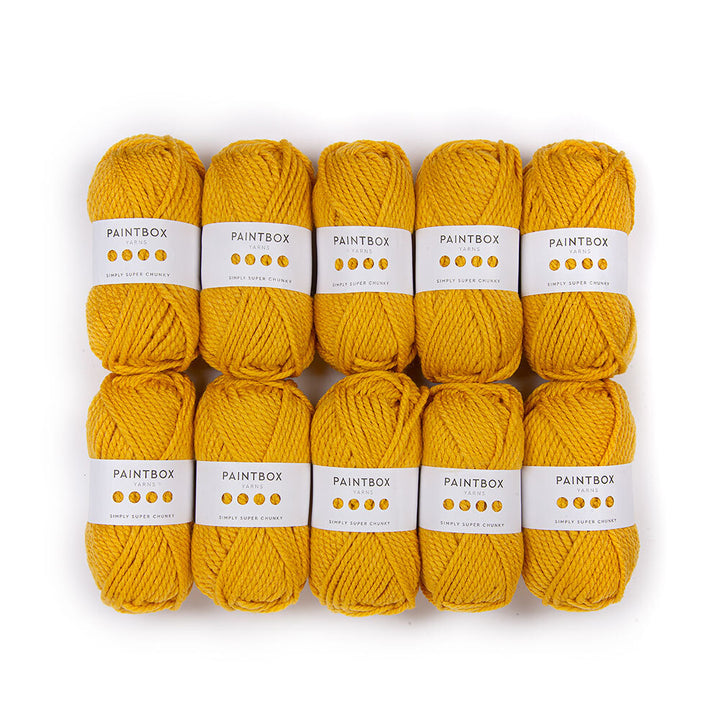
DK is a forgiving starting point for garments and accessories, with enough stitches per row to show off colourwork or texture without being fiddly. Paintbox Yarns Simply DK and Stylecraft Special DK both offer yellow shades that read well in flat colourwork and simple stocking stitch jumpers. If you want faster results, move up to Stylecraft Special Chunky for a weekend hat or cushion cover, where the thicker yarn shows off a bold yellow without needing hours of stitching. For heavier blankets or outerwear with real structure, chunky wool yarn gives you the bulk and warmth to go properly oversized.
Cotton or wool: which fibre suits yellow?
Cotton yarns such as Paintbox Yarns Cotton DK give yellow a crisp, slightly matte finish that's well suited to homeware, dishcloths and summer tops, since the fibre doesn't add sheen to compete with the colour. Wool and wool-blend bases, by contrast, often take yellow dye with a touch more depth and warmth, which is why mustard and ochre shades look particularly rich in ranges like merino wool yarn. If you want washability for baby items or everyday knits, Cascade Yarns 220 Superwash is a machine-washable option worth considering.
Needle and hook sizes for a clean yellow fabric
Yellow shows every dropped stitch and tension wobble more than darker colours, so it's worth matching your needle or hook size carefully to the yarn band rather than guessing. For a DK-weight yellow, a 4mm needle or 4mm crochet hook is a common starting point, with aran generally calling for something a little larger, and chunky yarns like Stylecraft Special Chunky moving up further still. Always check the ball band for the recommended size, and knit or crochet a swatch first in your chosen yellow, since pale lemon shades in particular can make it harder to spot where you've gone up or down a stitch count by eye alone.
Working with variegated and multi-tonal yellows
A variegated yellow yarn, moving between lemon, gold and amber in the same skein, can look muddy in close colourwork but comes alive in simple garter stitch, granny squares or textured crochet where the colour has room to pool and shift. If you're new to variegated skeins, start with a swatch to see how the repeats fall before committing to a full garment, and keep plain stitches nearby in your pattern so the yarn does the visual work rather than competing with cables or lace.
- Lemon and pale yellow pair well with white, denim blue and soft grey
- Mustard and ochre sit naturally alongside rust, olive and chocolate brown
- Cotton bases give a flatter, matte yellow; wool blends often look warmer
- Swatch under daylight, not just indoor lighting, before starting a project
- Variegated yellows suit simple stitches better than intricate colourwork
Frequently asked questions
Is there a free yellow yarn pattern available as a PDF? Many patterns are available as instant PDF downloads; if you specifically want no-cost options, browse the free patterns within knitting and crochet wool yarn, where filtering by free downloads will bring up suitable projects for yellow shades.
What yellow yarn suits a beginner? A smooth, non-splitty DK like Stylecraft Special DK or Hayfield Bonus DK is easier to learn on, since the stitches are clear to read and mistakes are simple to unpick without snagging.
Will dye lots vary between skeins of the same yellow? Yes, yellow is one of the shades most prone to dye lot variation, so for a single large project such as a jumper or blanket, buy all your skeins from the same dye lot where the label allows it, and keep spare labels in case you need to order more later.