Your selection may affect price, shipping options and product availability.

Suggested countries


All countries

Sock Yarn

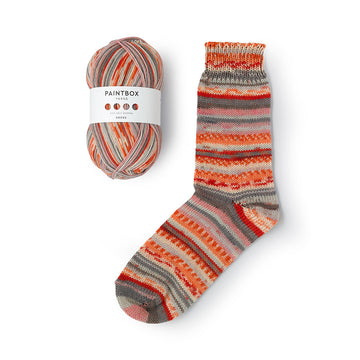
Sock yarn in 4 ply, 6 ply and self-striping colourways, chosen for the qualities socks actually need: springy wool, a little nylon for the heels, and dye that survives repeated washing. You will find superwash merino blends, hand-dyed skeins, self-patterning balls and plain solids for colourwork or contrast heels and toes. Match a skein to a pattern from the sock knitting patterns, look at self-striping yarn, or browse the wider 4 ply yarn range.
read more

What makes a yarn a sock yarn

Any yarn can be knitted into a sock; only some yarns make a sock you will still be wearing in three years. The classic recipe is a tightly spun wool with roughly a quarter nylon or polyamide, superwash-treated so it can go in the machine. The tight spin resists abrasion, the nylon takes the punishment at heel and ball of foot, and the wool provides the elasticity that holds the sock on your leg. Fingering weight, sold as 4 ply in the UK, is the standard; 6 ply is the heavier option for boot socks and slipper socks.

Fibre choices and how they wear

  • Superwash merino with nylon: the reliable everyday option, soft, machine washable and hard-wearing.
  • Non-superwash wool: grippier, warmer and often longer-lasting, but wants a hand wash.
  • Wool with silk or bamboo: lovely sheen and drape, less spring, better in shawls and light socks than in walking socks.
  • Cotton and cotton blends: cool and washable, but with no memory, so add ribbing and expect a looser fit.
  • Plain solids: the right choice if you want cables or lace to be visible.

Self-striping, speckles and pooling

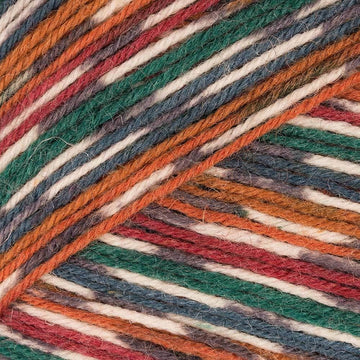
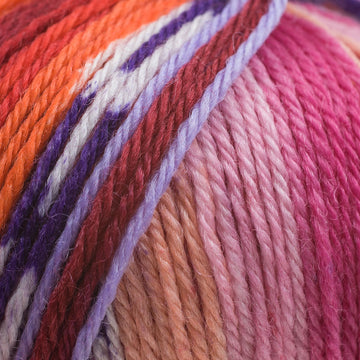
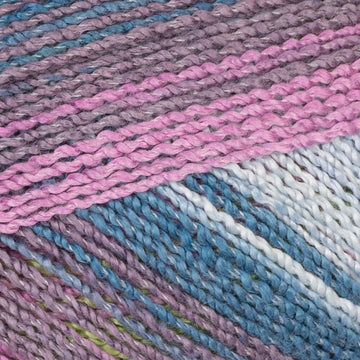
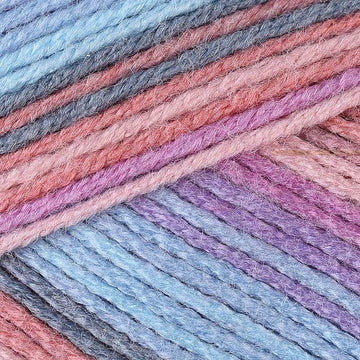
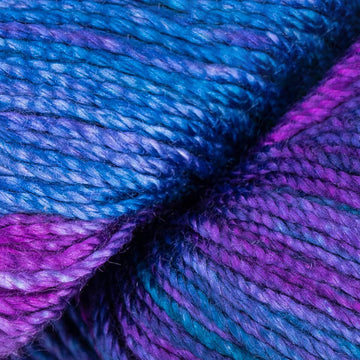
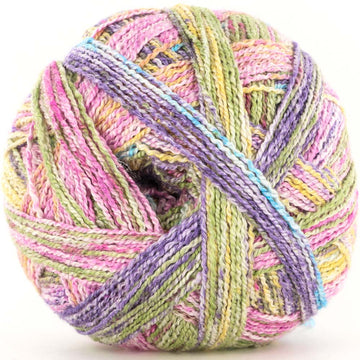
Self-patterning yarns are engineered to stripe or form a faux fair isle at a particular stitch count, so the same ball can look completely different on a child's sock and an adult's. Hand-dyed multicolours behave less predictably: colours can pool into blotches or spiral, depending on your tension and circumference. If pooling bothers you, alternate two balls every two rounds, or choose a textured stitch pattern that breaks up the colour. If it does not, pooling is often the most interesting thing the yarn does.

How much to buy

A single 100g skein of 4 ply sock yarn is generally intended to make one adult pair, but larger feet, longer legs and heavier gauges eat into that margin quickly. If your foot is bigger than average or you want a mid-calf sock, buy an extra skein or plan contrast cuffs, heels and toes in a second colour. Sock yarn is also excellent for shawls, baby cardigans and lightweight hats, so leftovers are never wasted.

Needles and tension

Most sock knitters work at a firmer tension than the ball band suggests, usually on 2.25mm to 2.75mm needles, because a dense fabric resists wear and stops toes poking through. Sharp needle tips help on tightly spun yarns. Whether you use double-pointed needles, magic loop or two circulars makes no difference to the finished sock, so use whichever keeps you knitting. Ladders at the needle joins usually disappear if you shift the change point every few rounds.

Care, repairs and storage

Wash superwash sock yarn on a cool, gentle cycle in a mesh bag and dry flat; hot washes and tumble drying are what actually shrink and felt socks. Turn them inside out to limit pilling. Keep a metre or two of leftover yarn from each pair for darning, and reinforce heels before they wear through rather than after. Moths like clean wool no less than dirty wool, so store washed socks and skeins with cedar or lavender in a closed box.

Sock yarn questions

Do I need nylon in my sock yarn? Not necessarily, but it noticeably extends the life of heels and toes. Pure wool socks last longer if you knit them at a tight tension.

Is sock yarn the same as 4 ply? Sock yarn is usually 4 ply weight, but it is spun more tightly and often blended for durability.

Can I crochet socks with it? Yes, though crochet fabric is denser, so choose a pattern written for crochet rather than converting a knitting pattern.

How many skeins for one pair? One 100g skein covers most adult pairs; buy two if you have large feet or want long legs.

What else can I make with it? Shawls, baby knits, mitts and light hats all suit fingering weight. Browse more wool yarn for other options.

Added to your cart!

Your Cart Is Empty

Start Shopping