

Knitting Patterns for Pets
Knitting patterns for pets: dog coats and jumpers in sizes from miniature dachshund to large breed, cat beds, cat toys and pet blankets. Most dog coat designs here are worked in aran or chunky for warmth and speed, with several written in four sizes on a single pattern, and there are brioche, fisherman's rib, striped and hooded versions. See the dog sweater and coat patterns, the cat bed patterns and cat toy patterns.
read more
-
 Canine Hoodie
$4.50
Canine Hoodie
$4.50
-
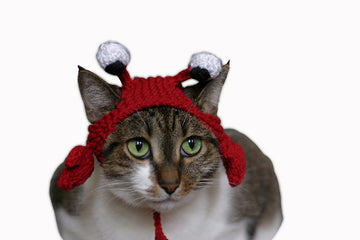 The Crabby Cat hat
$5.00
The Crabby Cat hat
$5.00
-
 Dog Bandana Cowl
$3.00
Dog Bandana Cowl
$3.00
-
 Dog Daft Cushion and Bowl Mat
$5.38
Dog Daft Cushion and Bowl Mat
$5.38
-
 German short hair pointer chart
$4.14
German short hair pointer chart
$4.14
-
 Buffalo Plaid Dog Sweater
$6.00
Buffalo Plaid Dog Sweater
$6.00
-
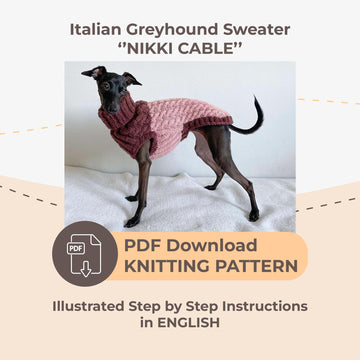 Dog Sweater NIKKI CABLE
$23.06
Dog Sweater NIKKI CABLE
$23.06
-
 Fish Stocking for Cats
$2.00
Fish Stocking for Cats
$2.00
-
 French Bulldog Bath Time Tea Cosy
$6.20
French Bulldog Bath Time Tea Cosy
$6.20
-
 Dragon Slayer Dog Sweater in Lion Brand Wool Ease - L30274
$0.00
Dragon Slayer Dog Sweater in Lion Brand Wool Ease - L30274
$0.00
-
 Unleashed
$12.00
Unleashed
$12.00
-
 Charming Christmas Pet Scarf
$4.02
Charming Christmas Pet Scarf
$4.02
-
 Minion jumpsuit for dog
$4.61
Minion jumpsuit for dog
$4.61
-
 Waste Not Bobby Dazzler Chunky Dog Bow Tie
$1.61
Waste Not Bobby Dazzler Chunky Dog Bow Tie
$1.61
-
 Puppy Hug Cowl
$4.79
Puppy Hug Cowl
$4.79
-
 Feeling Sheepish
$7.00
Feeling Sheepish
$7.00
-
 Dog Bone Stocking
$4.84
Dog Bone Stocking
$4.84
-
 Sheep Station Sensation
$6.44
Sheep Station Sensation
$6.44
-
 Sunday Hat
$4.50
Sunday Hat
$4.50
-
 Going Batty Dog Sweater
$4.00
Going Batty Dog Sweater
$4.00
-
 Dog Fancy Braid Vest
$4.80
Dog Fancy Braid Vest
$4.80
-
 Snug Pup Pullover
$6.75
Snug Pup Pullover
$6.75
-
 Black Cat Knit Intarsia Chart
$3.41
Black Cat Knit Intarsia Chart
$3.41
-
 The Patriot Dog Sweater in Lion Brand Heartland - L32376
$0.00
The Patriot Dog Sweater in Lion Brand Heartland - L32376
$0.00
-
 Dog Coat With Cargo Pockets in Bernat Super Value
$0.00
Dog Coat With Cargo Pockets in Bernat Super Value
$0.00
-
 Biscuits & Bones Dog Coat in Patons Decor
$0.00
Biscuits & Bones Dog Coat in Patons Decor
$0.00
-
 Hope for Spring Hoodie
$1.72
Hope for Spring Hoodie
$1.72
-
 Doggie Dottie
$9.00
Doggie Dottie
$9.00
-
 Gentleman's Dog Sweater
$5.50
Gentleman's Dog Sweater
$5.50
-
 Holland Gardens
$7.00
Holland Gardens
$7.00
-
 Santa Dog Hat
$17.18
Santa Dog Hat
$17.18
-
 Cat hat for cat with kitty ears
$3.39
Cat hat for cat with kitty ears
$3.39
-
 Purl Stripe Dog Sweater
$3.99
Purl Stripe Dog Sweater
$3.99
-
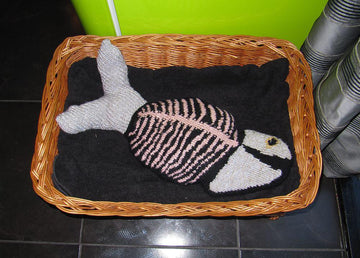 Luxury Fish Supper Silk Cushion
$4.04
Luxury Fish Supper Silk Cushion
$4.04
-
 Designer Dog Coat and Cat Coat
$16.13
Designer Dog Coat and Cat Coat
$16.13
-
 Year of the Dog Blanket
$6.50
Year of the Dog Blanket
$6.50
-
 Mini adoughrable
$4.04
Mini adoughrable
$4.04
-
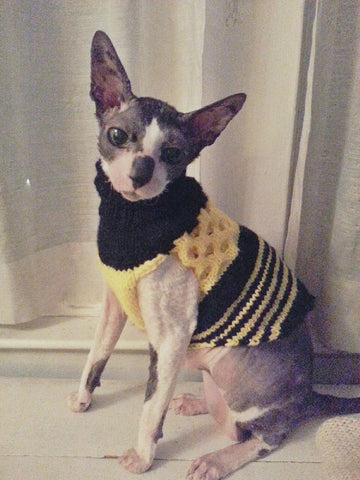 The Bee's Knees
$3.27
The Bee's Knees
$3.27
-
 Dog Dream Sweater
$2.00
Dog Dream Sweater
$2.00
-
 A Couple of CatFish
$2.08
A Couple of CatFish
$2.08
-
 Olive Bear Dog Snood
$6.00
Olive Bear Dog Snood
$6.00
-
 Small Pet Bandana
$4.04
Small Pet Bandana
$4.04
-
 Malteser Chart
$4.16
Malteser Chart
$4.16
-
 Stylin' Rescue Pup Sweater
$12.90
Stylin' Rescue Pup Sweater
$12.90
-
 Rockies Hoodie Dog Coat
$4.84
Rockies Hoodie Dog Coat
$4.84
-
 Fisch - German only
$1.57
Fisch - German only
$1.57
-
 Eddie Striped Dog Sweater
$6.00
Eddie Striped Dog Sweater
$6.00
-
 Christmas is Coming
$7.00
Christmas is Coming
$7.00
-
 Popcorn Fish Toy for Cats
$3.91
Popcorn Fish Toy for Cats
$3.91
-
 Dog Sweater ACRI CABLE
$25.95
Dog Sweater ACRI CABLE
$25.95


