Why Snuggly DK keeps getting bought
Sirdar Snuggly DK survives because it does the one thing baby yarn absolutely must do: it goes in the washing machine and comes out the same. Beyond that it is genuinely soft to the hand, it knits at a standard DK tension so it slots into almost any pattern, and the shade range is deep enough that you can find the exact colour a pattern photograph shows. Squeeze a ball once and the name stops sounding like marketing. It is used for pram blankets, matinee jackets, cardigans, hats, bootees and toys.
Tension, needles and hooks
As a standard double knit, it is written for 4mm needles at a typical DK tension, and for crochet most people reach for a 4mm hook. Always work a tension square before a garment: baby patterns are sized by age, and being half a stitch out over 10cm can move a finished chest by a full size. If your fabric feels dense, go up a needle size; babies are happier in a fabric with some give, and a slightly looser blanket drapes far better over a pram.
What to make with it
- Blankets and pram covers: plain garter or a simple textured stitch, four to six 50g balls depending on the size.
- Matinee jackets and cardigans: the classic use. A newborn cardigan usually takes two to three balls.
- Hats and bootees: single ball projects, ideal for using up the ends of a cardigan.
- Toys and comforters: crochet at a firm tension with a smaller hook so the stuffing does not show.
- Toddler jumpers: the brighter shades come into their own once pastels are outgrown.
Choosing colours
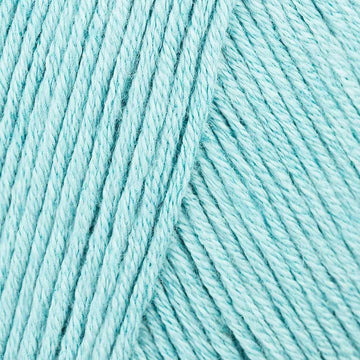
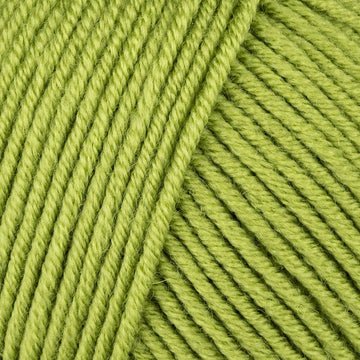
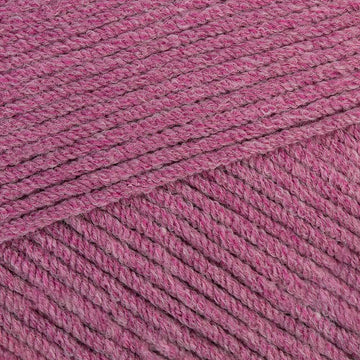
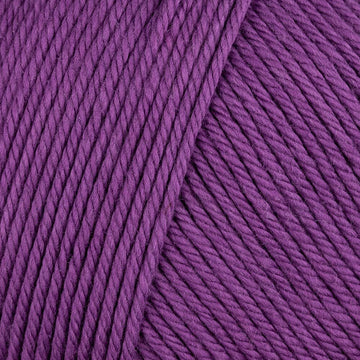
The temptation with baby yarn is to default to lemon, mint and white. The wider Snuggly palette makes stripes and colourwork worth considering: two contrasting brights in a simple garter stripe blanket look modern and use up part balls. Keep all the yarn for a single project in one dye lot, since flat stocking stitch on a blanket shows a lot change as a faint horizontal band that no amount of blocking hides.
Finishing a baby garment neatly
Block pieces before seaming, even in a washable yarn, because it evens out the edges and makes matching row for row far easier. Use mattress stitch for side and sleeve seams and backstitch across the shoulders. Weave ends in along the seam line rather than across the back of the fabric, where they will show through pale stocking stitch. Sew buttons with a doubled thread and check they are secure before gifting; ribbon ties are a good alternative for the smallest sizes.
Washing and passing it on
Machine washable at a low temperature is the whole point of this yarn, but check the ball band and follow it, and dry flat rather than tumbling if you want the garment to keep its shape through repeated washes. Include a spare button and a note of the wash instructions with any gift; new parents are not going to hunt for the ball band. Store finished items folded in a bag rather than hanging.
Sirdar Snuggly DK questions
Is Sirdar Snuggly DK machine washable? Yes, at the temperature given on the ball band. Dry flat for best results.
What needle size should I use? A standard DK tension on 4mm needles, but always swatch and adjust to match your pattern.
How many balls for a baby blanket? Commonly four to six 50g balls, depending on the finished size and stitch pattern.
Can I crochet with it? Yes. A 4mm hook is the usual starting point for blankets, hats and toys.
Is it only for babies? No. It is a standard DK, so it works for children's garments and lightweight adult accessories too.