Bunnies to knit, and what they involve
Knitted rabbits are among the best gift projects there are: small enough to finish in a couple of evenings, cheap in yarn, and endlessly personal once you choose the face. The patterns in this collection cover classic seated bunnies, floppy-eared toys, rabbit hand puppets that entertain a toddler far longer than a static toy, and pairs — rabbit-and-cat sets that let you use one pattern twice. Most are written flat in pieces and seamed, which is good news if you have never knitted in the round.
Choosing yarn for a toy
- Fluffy and eyelash yarns — Snuggly Snowflake Chunky, King Cole Tinsel, Ophelia — give an instantly furry rabbit and hide every uneven stitch, which is why beginners love them.
- Smooth DK such as Country Style DK or Deramores Studio Baby Soft DK gives a neater, more defined shape and much easier stitch counting.
- Chenille and plush yarns like King Cole Yummy or Truffle DK make a heavier, squashier toy that sits well in a cot.
- Mixed pairs — a smooth body with fluffy ears or a contrast tail — give the best of both without fighting fur all the way through.
Safety, especially for babies
If the rabbit is for a child under three, do not use plastic safety eyes or buttons at all. Embroider the eyes and nose in a contrast yarn or stranded cotton, working the stitches firmly and fastening off inside the head before you close the seam. Use new, clean toy stuffing that meets the relevant safety standard rather than scraps of fabric or offcuts, and check every seam is closed with a doubled sewing yarn. Ribbon bows and loose neck ties are best left off a baby's toy.
Knitting tension for toys
Toy knitting is the one place where you deliberately go tighter than the ball band. Drop a needle size or two below the recommendation so the fabric is dense and the stuffing cannot poke through or show as lumps. It makes for slower knitting and firmer hands, but it is what gives a toy a crisp shape rather than a saggy one. Stuff a little at a time, using the blunt end of a knitting needle to work the filling right into the ears, muzzle and paws, and keep checking the shape from arm's length as you go.
Assembly and giving the rabbit a face
Seam with mattress stitch in a smooth yarn even if the toy is knitted in a fluffy one — you will never see the seam through the fur, and you will be able to see what you are doing. Pin the ears, arms and legs in place and look at the toy from the front before you sew: a centimetre of difference in ear placement changes the whole expression. Embroider the face last, and try the eyes in pins first. A long doll's needle makes it possible to sculpt the head slightly, pulling the eyes in for a defined face.
Easter, new babies and care
Rabbits are the obvious Easter make, and a small bunny fits a card envelope better than chocolate does. They are equally at home as new-baby gifts, christening presents and first birthdays. For washing, most of these yarns are machine washable acrylics or blends, but stuffing takes a long time to dry — hand wash in lukewarm water, squeeze gently in a towel, and dry flat somewhere warm and airy. Brush a fluffy rabbit gently with a soft baby brush to lift matted fur.
Rabbit knitting questions
Are these patterns suitable for beginners? Many are — look for toys knitted flat in stocking stitch with simple shaping, and use a fluffy yarn to hide any wobbles.
How much yarn does a knitted rabbit take? Usually one or two 50g balls, making them ideal for leftovers.
Can I make the toy bigger? Yes — knit the same pattern in a heavier yarn with larger needles, and allow more stuffing.
What stuffing should I use? Washable polyester toy filling that meets toy safety standards.
Are the patterns downloadable? Most are instant PDFs; a few are printed leaflets.


 Bunny Rabbit in Deramores Studio Baby Soft DK - Downloadable PDF
$3.99
Bunny Rabbit in Deramores Studio Baby Soft DK - Downloadable PDF
$3.99
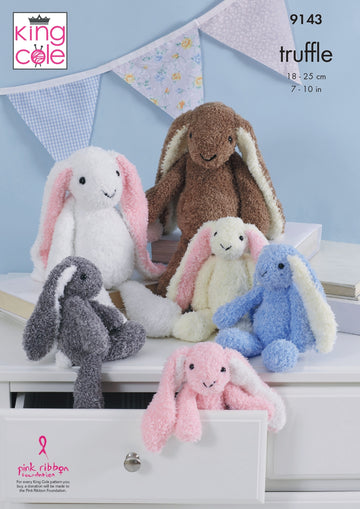 Rabbits in Truffle Knitted in King Cole Truffle DK - 9143 - Downloadable PDF
$5.59
Rabbits in Truffle Knitted in King Cole Truffle DK - 9143 - Downloadable PDF
$5.59
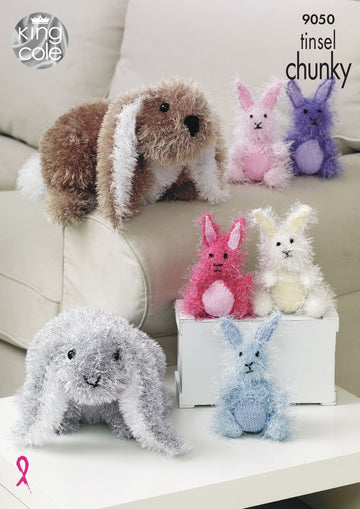 Rabbits in King Cole Tinsel Chunky & Dollymix DK - 9050 - Downloadable PDF
$5.59
Rabbits in King Cole Tinsel Chunky & Dollymix DK - 9050 - Downloadable PDF
$5.59
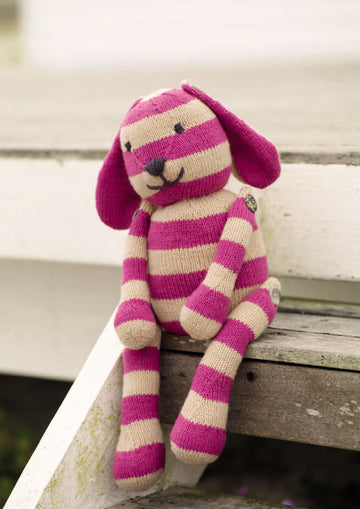 Rabbit Soft Toy in Sirdar Country Style DK - 7939 - Downloadable PDF
$8.25
Rabbit Soft Toy in Sirdar Country Style DK - 7939 - Downloadable PDF
$8.25
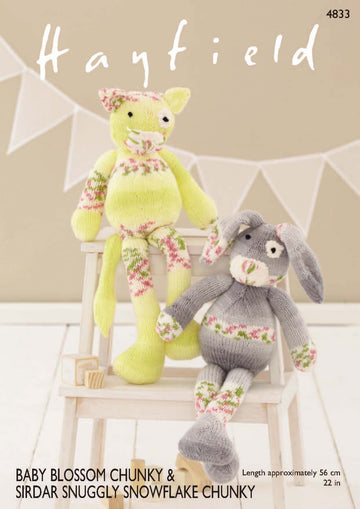 Rabbit and Cat Toys in Hayfield Baby Blossom and Sirdar Snuggly Snowflake Chunky - 4833 - Downloadable PDF
$5.55
Rabbit and Cat Toys in Hayfield Baby Blossom and Sirdar Snuggly Snowflake Chunky - 4833 - Downloadable PDF
$5.55
 Rabbit Toy in Sirdar Ophelia - 2470- Downloadable PDF
$8.25
Rabbit Toy in Sirdar Ophelia - 2470- Downloadable PDF
$8.25
 Rabbit and Cat Hand Puppet in Sirdar Snuggly Snowflake Chunky & Snuggly Baby Crofter DK - 4728 - Downloadable PDF
$8.25
Rabbit and Cat Hand Puppet in Sirdar Snuggly Snowflake Chunky & Snuggly Baby Crofter DK - 4728 - Downloadable PDF
$8.25
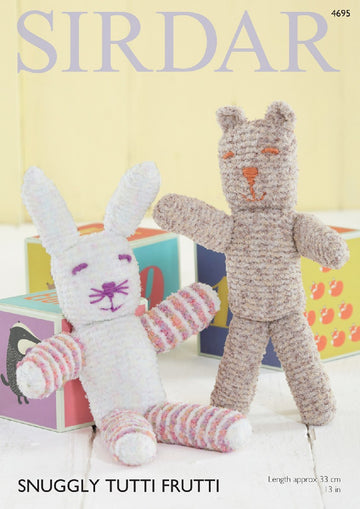 Bear and Rabbit Toys in Sirdar Snuggly Tutti Frutti - 4695 - Downloadable PDF
$8.25
Bear and Rabbit Toys in Sirdar Snuggly Tutti Frutti - 4695 - Downloadable PDF
$8.25
 Rabbit Knitted in King Cole Yummy - 9150 - Downloadable PDF
$5.59
Rabbit Knitted in King Cole Yummy - 9150 - Downloadable PDF
$5.59
 Rabbit in Spud & Chloe - Downloadable PDF
$0.00
Rabbit in Spud & Chloe - Downloadable PDF
$0.00
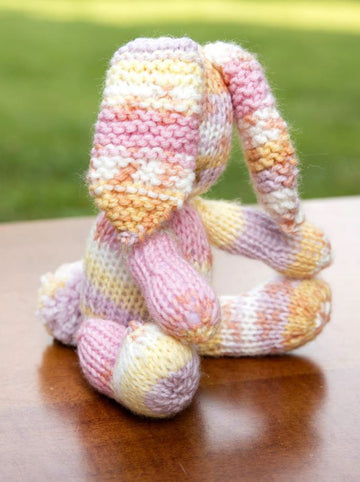 Rabbit in Plymouth Yarn Dreambaby DK Paintpot - F671 - Downloadable PDF
$0.00
Rabbit in Plymouth Yarn Dreambaby DK Paintpot - F671 - Downloadable PDF
$0.00


