Designs built around alpaca, merino and cashmere
These patterns exist because of the yarn rather than the other way round. Amano's blends lean on Peruvian baby alpaca, often mixed with merino, silk or cashmere, and the designs in this collection are shaped to suit what those fibres actually do: heavy drape, real warmth for very little weight, and a soft bloom that develops after the first wash. That leads to a particular design vocabulary - generous cowls, deep shawls and wraps, relaxed sweaters and cardigans with unfussy lines, and a good run of accessories where a single skein of an expensive yarn goes furthest.
How alpaca behaves, and how it changes your knitting
Alpaca has almost no crimp compared with sheep's wool, which means almost no memory. It drapes rather than springs. Three consequences worth knowing before you cast on: ribbing in pure alpaca will relax rather than grip, so cuffs and hems benefit from a smaller needle or a merino-blend yarn; a garment knitted at the same tension as wool will grow lengthways with wear, so choose a shorter body than you think you need; and alpaca is warmer per gram than wool, so a lightweight 4 ply alpaca sweater is warmer than the same jumper in DK wool. Blends with merino restore some bounce and are the safer choice for fitted garments.
Choosing a pattern by experience
- First Amano project: a simple garter or stocking stitch cowl - one or two skeins, and it shows the fibre's halo immediately.
- Next: a hat with a ribbed brim, or fingerless mitts, which teach working in the round on a soft, slippery yarn.
- Building up: a triangular or crescent shawl with a lace or garter-stripe edge, where alpaca's drape does the design work.
- A committed project: a relaxed-fit sweater or a long-line cardigan, ideally in a merino blend for structure.
- For gifting: accessories in cashmere blends - luxurious, quick, and forgiving of unknown sizes.
Tension and substitution
Knit the tension square, wash it and dry it flat before measuring. This is not optional with alpaca, because the fabric relaxes and the washed tension is often noticeably looser than the tension straight off the needle - the difference between a jumper that fits and one that reaches your knees by March. When substituting another yarn into an Amano pattern, match the stated tension over 10cm first, then compare fibre: another alpaca or alpaca blend will behave similarly, whereas a cotton at the same tension will produce a completely different garment. Buy by total metreage and keep to one dye lot.
Needles and handling
Soft, slightly fuzzy yarns grip metal less than they do wood. Many knitters find bamboo or wooden needles easier with alpaca for that reason, though very fine laceweight lace patterns often go better on sharp metal tips. Alpaca is difficult to unpick cleanly once the halo has developed, so use a lifeline on lace and be honest about mistakes early rather than four rows later.
Finishing, wearing and care
Block wet: soak in cool water with wool wash, press out the water in a towel without wringing, pin to measurements and dry flat. Alpaca blooms in blocking and lace opens dramatically. In wear, expect a little shedding at first and some pilling under the arms, which a wool comb handles. Wash by hand in cool water, never agitate, and always dry flat - hanging an alpaca garment while wet will stretch it permanently and there is no recovering the length. Store folded, with cedar or in a sealed bag, since moths are as fond of alpaca as of wool.
Amano knitting pattern questions
Do I have to use Amano yarn? No. Match the pattern's tension over 10cm and the total metreage, and a comparable alpaca or merino blend will work.
Are these patterns instant downloads? The listing states the format for each - patterns are supplied as downloadable PDFs or printed leaflets and booklets.
Is alpaca itchy? Baby alpaca is generally softer than standard wool and suits most people next to the skin, though the halo can tickle a sensitive neck.
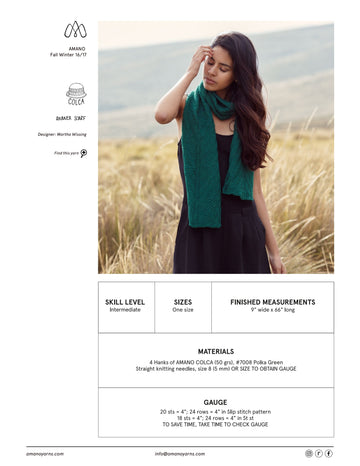
What size needles do these patterns use? It varies by yarn weight across 4 ply to chunky; each pattern states the needle size and tension on the front page.
How do I stop an alpaca jumper stretching? Choose a shorter body length, work ribbing on smaller needles, wash and block your tension square before starting, and always dry the finished garment flat.