Choosing a hook that suits your hands
Crocheters develop strong opinions about hooks faster than about yarn, and it is because the hook is doing something your hand has to repeat thousands of times an hour. Three features actually change the experience. The head shape — a pointed, tapered head slides into tight stitches, while a rounder head is kinder to yarn that splits. The throat, which can be inline (the hook sits flush with the shaft, giving very even stitches) or tapered (a scooped throat that catches yarn quickly). And the grip, which decides whether an hour of crochet leaves your thumb aching. There is no universally best answer, which is why the range here is so broad.
Materials and what each is for
- Aluminium: smooth, fast and cool to the touch. The default for acrylic and everyday yarns, and the best choice if your stitches tend to stick.
- Wood and bamboo: warm, light and slightly grippy, which slows the yarn down. Excellent for slippery cotton, silk and bamboo yarns.
- Plastic: light and inexpensive, and the usual material for the very large sizes where a metal hook would be heavy.
- Steel: the tiny sizes, from around 0.6mm to 1.75mm, for crochet thread, doilies and filet lace.
- Ergonomic: a metal or plastic hook set into a soft, wide handle. The right answer for anyone with hand pain, arthritis or long crochet sessions.
- Tunisian and afghan hooks: extra-long or cabled, so a full row of live loops can rest on the shaft.
Sizes and matching them to yarn
Hook sizes are given in millimetres in the UK and Europe, with US letter equivalents on many packs. As a starting point: 2–3mm for 4 ply and sock yarn, 3.5–4.5mm for DK, 5–6mm for aran, 6–9mm for chunky, and 10mm upwards for super chunky and tube yarns. Steel hooks below 2mm belong to thread work. The ball band always gives a suggestion, but treat it as an opening bid — if your fabric is floppy, go down a size; if it is stiff and your hand is tiring, go up. Amigurumi is the standard exception: crocheters routinely use a hook one or two sizes smaller than the band suggests so the stuffing does not show through.
Sets versus single hooks
A set is the cheaper route to a full size range and keeps everything in one case, which matters when you own eleven hooks and can find three. Buy singles when you already know exactly which brand and head shape suits you, when you need one unusual size, or when you want a good ergonomic hook in the size you use most. Interchangeable Tunisian sets, where hook tips screw onto cables of different lengths, are worth it if you plan to make blankets.
Looking after them and working comfortably
Wooden hooks appreciate an occasional rub with a little beeswax or oil to keep the surface smooth; if one starts snagging, very fine sandpaper along the shaft fixes it. Never leave hooks loose in a bag where the heads can be chipped. For comfort, hold the hook lightly rather than gripping, keep your wrist straight, and stop every twenty minutes to stretch your fingers. If a hook leaves a groove in your index finger, the handle is too thin — add a foam grip or switch to an ergonomic model.
Crochet hook questions
What size crochet hook should I start with? A 4mm hook with DK yarn — the most forgiving combination for learning.
What is the difference between inline and tapered hooks? Inline hooks give very even stitches; tapered throats catch the yarn faster. Try both.
Are ergonomic hooks worth it? If you crochet for more than an hour at a time, or have any hand pain, yes.
What is a Tunisian hook for? Tunisian crochet keeps a whole row of loops on the hook, so it needs the extra length or a cable.
Which hook for amigurumi? One or two sizes smaller than the ball band suggests, to make a dense fabric that hides the stuffing.


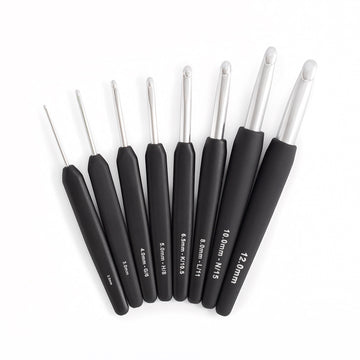 KnitPro Aluminum Soft-Grip Silver Crochet Hook
From $2.99
KnitPro Aluminum Soft-Grip Silver Crochet Hook
From $2.99
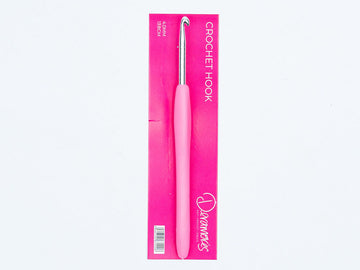 Deramores Standard Hook 14cm (5.5in)
From $4.25
Deramores Standard Hook 14cm (5.5in)
From $4.25
 Clover Soft Touch Crochet Hook (13cm)
From $6.75
Clover Soft Touch Crochet Hook (13cm)
From $6.75
 KnitPro Wave 2.0 Deluxe Crochet Hook
From $3.49
KnitPro Wave 2.0 Deluxe Crochet Hook
From $3.49
 KnitPro Ginger Single Ended Standard Hook 15cm (6in)
From $6.69
KnitPro Ginger Single Ended Standard Hook 15cm (6in)
From $6.69
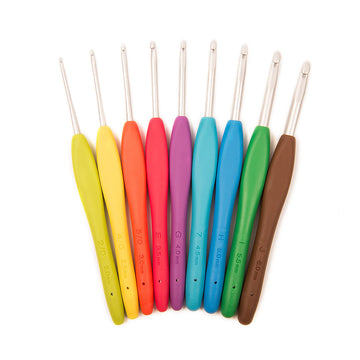 Clover Amour Aluminum Crochet Hook (14cm)
From $8.95
Clover Amour Aluminum Crochet Hook (14cm)
From $8.95
 KnitPro Ginger Afghan/Tunisian Hook Tips 15cm (6in)
From $8.09
KnitPro Ginger Afghan/Tunisian Hook Tips 15cm (6in)
From $8.09
 KnitPro Trendz Tricot/Afghan Single Ended Crochet Hook 12"
From $3.25
KnitPro Trendz Tricot/Afghan Single Ended Crochet Hook 12"
From $3.25
 KnitPro Basix Beech Crochet Hook 15cm (6in)
From $3.49
KnitPro Basix Beech Crochet Hook 15cm (6in)
From $3.49
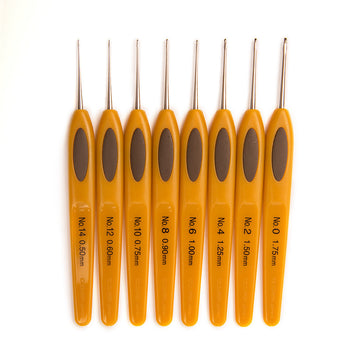 Clover Soft Touch Steel Crochet Hook
From $6.79
Clover Soft Touch Steel Crochet Hook
From $6.79
 Lykke Driftwood Single Ended Crochet Hook 15cm (6")
From $7.80
Lykke Driftwood Single Ended Crochet Hook 15cm (6")
From $7.80


