Why buy yarn in a value pack
Large projects fail for boring reasons: you run out two rows from the cast-off, or the last ball is a different dye lot and a faint stripe appears across the shoulder, so you set it aside in frustration and never come back to it. A value pack solves both issues. Buying a multi-ball bundle in one go means consistent colour, a lower cost per gram, and enough yardage to commit to a blanket, an oversized jumper or a set of matching gifts without rationing. It is also how most people build a usable stash — several balls of one shade you can actually make something from, rather than singles that never find a project.
How much yarn a project really needs
- Baby blanket (pram size): roughly 600–1,000m in DK, depending on stitch pattern.
- Adult jumper: commonly 900–1,800m, with 4 ply at the top of that range and chunky at the bottom.
- Full-size throw or afghan: often 2,000–3,500m; textured and cabled designs eat considerably more than plain.
- Hat, cowl or mitts: 100–300m — the natural home for pack leftovers.
- Crochet in general: allow around a third more yarn than the equivalent knitted fabric.
Always compare metres, not ball counts. A pack of ten 50g balls and a pack of five 100g balls can be identical in yardage, and a chunky 100g ball holds far fewer metres than a 4 ply one.
Choosing a pack for your project
Match fibre to purpose before you chase price. Acrylic and acrylic blends are the natural choice for blankets, children's clothes and charity knitting because they wash without ceremony and hold colour. Wool and wool blends give elasticity, blocking response and warmth, which matters for garments with ribbing and shaping. Cotton is cool and hard-wearing but has no memory, so avoid it for anything that needs to spring back. If a pack contains mixed shades, check that they share a tone — a pack that looks lively in the photo can turn muddy once crocheted into stripes.
Planning a big project without waste
Work your tension square first, from the pack yarn, and calculate from that rather than from the pattern's yarn. Weigh your first completed section — a granny square, a sleeve, twenty rows of a blanket — on a kitchen scale, then multiply. This one habit tells you within a ball whether the pack will see you through, and it is far more reliable than counting rows. Keep the ball band from one ball for the dye lot number and washing instructions.
What to do with the leftovers
Value packs almost always leave a surplus, which is a good problem. Scrap-yarn granny squares, striped hats, toys, bunting, coasters and colourwork accessories all thrive on partial balls. Storing leftovers by weight rather than by colour makes them far easier to use later, because the first question of any project is always "what weight is this?"
Care and storage
Store packs sealed and away from daylight; wool needs protection from moths, and any yarn will fade on a sunny shelf. If you are opening a pack over months, keep the balls together with their band so the dye lot stays traceable. Once made up, follow the ball band: cool machine wash for most acrylics, hand wash and dry flat for wool, and never hang a wet knitted or crocheted piece.
Value pack questions
Are value packs the same yarn as single balls? Yes — the saving comes from buying multiples, not from a different quality.
Will all the balls be the same dye lot? Packs are put together to be consistent, but always check the bands before you start a large single-colour piece.
How many balls do I need for a blanket? Work from the pattern's stated metrage and add one ball of headroom; textured stitches use noticeably more.
Can I mix a pack with yarn I already own? Only if the weight and fibre match closely. Otherwise use the other yarn for contrast trims and edges.
Are packs suitable for beginners? They are ideal — one shade, plenty of it, and no mid-project shopping.


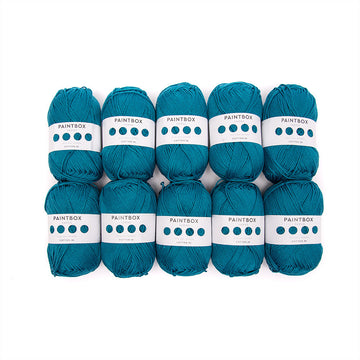 Paintbox Yarns Cotton Mix DK 10 Ball Value Pack
$43.50
Paintbox Yarns Cotton Mix DK 10 Ball Value Pack
$43.50
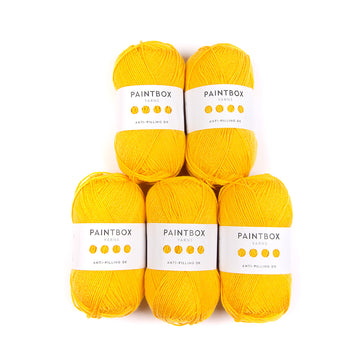 Paintbox Yarns Anti-Pilling DK 5 Ball Value Pack
$14.06
Paintbox Yarns Anti-Pilling DK 5 Ball Value Pack
$14.06
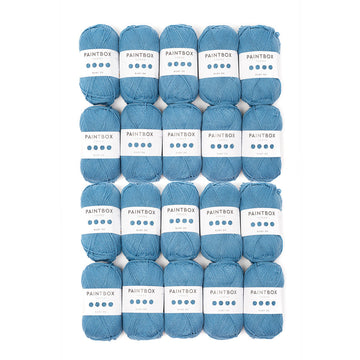 Paintbox Yarns Baby DK 20 Ball Value Pack
$55.00
Paintbox Yarns Baby DK 20 Ball Value Pack
$55.00
 Paintbox Yarns Wool Mix Super Chunky 20 Ball Value Pack
$160.88
Paintbox Yarns Wool Mix Super Chunky 20 Ball Value Pack
$160.88
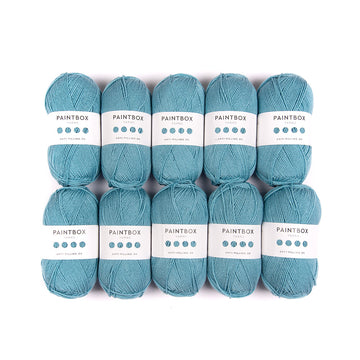 Paintbox Yarns Anti-Pilling DK 10 Ball Value Pack
$27.00
Paintbox Yarns Anti-Pilling DK 10 Ball Value Pack
$27.00
 Paintbox Yarns Wool Mix Aran 20 Ball Value Pack
$107.25
Paintbox Yarns Wool Mix Aran 20 Ball Value Pack
$107.25
 Paintbox Yarns Wool Blend DK 20 Ball Value Pack
$111.38
Paintbox Yarns Wool Blend DK 20 Ball Value Pack
$111.38
 Paintbox Yarns 100% Wool Worsted Superwash 20 Ball Value Pack
$198.00
Paintbox Yarns 100% Wool Worsted Superwash 20 Ball Value Pack
$198.00
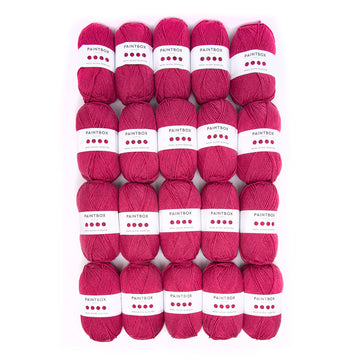 Paintbox Yarns Wool Blend Worsted 20 Ball Value Pack
$111.38
Paintbox Yarns Wool Blend Worsted 20 Ball Value Pack
$111.38
 Paintbox Yarns 100% Wool Chunky Superwash 20 Ball Value Pack
$206.25
Paintbox Yarns 100% Wool Chunky Superwash 20 Ball Value Pack
$206.25
 Paintbox Yarns Anti-Pilling DK 20 Ball Value Pack
$49.50
Paintbox Yarns Anti-Pilling DK 20 Ball Value Pack
$49.50


