Crocheted bunnies, from pocket-sized to armful
Rabbits are the most forgiving amigurumi subject there is, because the shapes are simple spheres and cylinders and the character comes almost entirely from the ears and the face. This collection of cute crochet patterns ranges accordingly: there are small snuggle bunnies in baby DK, flat-ish comforter bunnies for cots, chunky rabbits worked in Hoooked RibbonXL that finish in an afternoon and end up the size of a cushion, fluffy versions in Pipsqueak and fur yarns, Easter bunnies for the basket, and family sets where the same pattern gives you an adult and two small ones.
Choosing a bunny to make
- Fastest: a chunky bunny in RibbonXL or a super chunky yarn, worked on a large hook.
- For a new baby: a soft comforter bunny with a flat body and no small parts.
- For Easter: small basket-sized bunnies you can make several of in a weekend.
- For cuddling: a fluffy bunny in a fur or chenille-style yarn, forgiving of uneven stitches.
- For a project: a whole rabbit family in DK, jointed or dressed, made over a week or two.
Hook size is the thing beginners get wrong
Amigurumi is worked much tighter than garment crochet. Take the hook size on the ball band and go down by at least half a millimetre, sometimes a full millimetre. A DK yarn that would normally take a 4mm hook is often worked on a 3mm for a toy. The reason is simple: if you can see daylight through the fabric, the stuffing will push through and the bunny will look grubby within a month. Be aware: your hands will complain at first, so we recommend working in shorter sessions rather than loosening up your tension.
Techniques you will use
Almost every bunny starts with a magic ring, then continuous rounds of double crochet worked in a spiral rather than joined. Mark the first stitch of each round with a stitch marker or a scrap of contrasting yarn and move it up as you go, because a spiral has no visible seam to count from and losing your place is the most common mishap. Increases and invisible decreases shape the head and body; the invisible decrease, worked through the front loops only, is worth learning immediately because it removes the little bumps that ordinary decreases leave along a face. Ears are usually worked flat or in the round and sewn on, and their angle sets the whole personality of the toy.
Stuffing, faces and safety
Stuff firmly and in small handfuls, teasing each piece of filling apart before it goes in so you do not get lumps. Fill the head fully before closing, since a soft head sags and the face distorts. For toys going to babies and small children, embroider the eyes and nose in yarn or use safety eyes fitted before the head is closed, never buttons or beads sewn on. Sew the ears and limbs on with the same yarn using a whip stitch, going through the same stitches twice; a limb that comes off is the usual end of a much-loved toy.
Yarn, washing and gifting
A rabbit rarely takes more than a ball or two, so this is an excellent way to use a single skein or leftovers. Choose machine-washable yarn for anything a child will own, since toys often get dropped in mud. Fur and eyelash yarns hide stitches beautifully but make it hard to see where you are, so count carefully and consider working a plain yarn together with the fluffy one. Wash finished toys by hand in lukewarm water, squeeze rather than wring, and dry flat, reshaping the head and ears while damp.
Crochet bunny questions
Is there a free crochet bunny pattern here? Yes, free downloadable rabbit and bunny patterns are included in the collection.
What hook should I use for a crochet bunny? Smaller than the ball band suggests, typically 2.5mm to 3.5mm for DK, so the stuffing cannot show through.
How much yarn does a bunny take? Usually one or two balls, depending on size and yarn weight.
Is it safe for a baby? Embroider the features rather than using safety eyes or buttons, and sew all parts on very securely.
How do I stop losing my place working in a spiral? Use a stitch marker in the first stitch of every round and move it up as you complete each one.


 Mollie The Bunny - Free Toy Crochet Pattern For Boys & Girls in Paintbox Yarns Cotton Aran by Paintbox Yarns
$0.00
Mollie The Bunny - Free Toy Crochet Pattern For Boys & Girls in Paintbox Yarns Cotton Aran by Paintbox Yarns
$0.00
 Snuggle Bunny in Paintbox Yarns Baby DK - Downloadable PDF
$0.00
Snuggle Bunny in Paintbox Yarns Baby DK - Downloadable PDF
$0.00
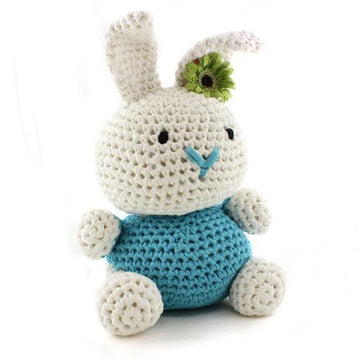 Bunny Rabbit Toy in Hoooked RibbonXL - Downloadable PDF
$3.49
Bunny Rabbit Toy in Hoooked RibbonXL - Downloadable PDF
$3.49
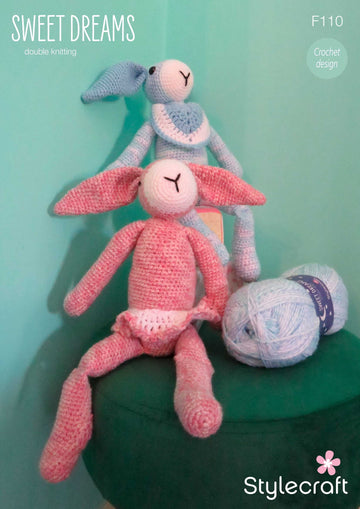 Crochet Bunny in Stylecraft Sweet Dreams DK - F110 - Downloadable PDF
$0.00
Crochet Bunny in Stylecraft Sweet Dreams DK - F110 - Downloadable PDF
$0.00
 Baby's Bunny Toy in Lily Sugar 'n Cream Solids
$0.00
Baby's Bunny Toy in Lily Sugar 'n Cream Solids
$0.00
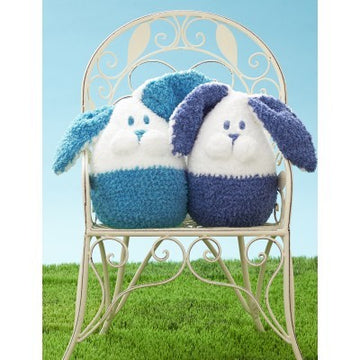 Bunny Buddy in Bernat Pipsqueak - Downloadable PDF
$0.00
Bunny Buddy in Bernat Pipsqueak - Downloadable PDF
$0.00
 The Rabbit Family in King Cole Merino DK - 9034 - Downloadable PDF
$4.45
The Rabbit Family in King Cole Merino DK - 9034 - Downloadable PDF
$4.45
 My Furry Bunny in Red Heart Fur & Super Saver Economy Solids - LW5615 - Downloadable PDF
$0.00
My Furry Bunny in Red Heart Fur & Super Saver Economy Solids - LW5615 - Downloadable PDF
$0.00
 Easter Bunny Toy in Hoooked RibbonXL - Downloadable PDF
$3.49
Easter Bunny Toy in Hoooked RibbonXL - Downloadable PDF
$3.49
 Flopsy Bunny Toy in Red Heart Super Saver Economy Solids - WR2117
$0.00
Flopsy Bunny Toy in Red Heart Super Saver Economy Solids - WR2117
$0.00


