Choosing the right double pointed knitting needles for socks, sleeves and small circumferences
Double pointed knitting needles (often shortened to DPNs or dp needles) are the traditional tool for knitting in the round when a project is too narrow for a circular needle. Points at both ends mean you can work stitches off either tip, which is exactly what you need once you've divided a sock, glove finger or hat crown across three or four needles and are knitting with a fifth. They're sold in sets rather than pairs, usually of four or five, so there's always a spare point to work from as you go round.
The two things that matter most when choosing double pointed knitting needles are length and material. Get those right and everything else - gauge, finish, comfort in the hand - falls into place.
Short or long: picking the right length
DPNs commonly come in 15cm (6in) and 20cm (8in) lengths, with some brands offering shorter 12.5cm options too. Shorter needles such as the KnitPro Zing 15cm set or the KnitPro Dreamz 12.5cm set suit narrow circumferences like sock cuffs, mitten thumbs and toys, where a longer needle just gets in the way and stitches slide off the unused ends. Once you're working something wider - a hat body, a sleeve, or a jumper yoke before it's small enough for the crown - a 20cm set like the Deramores Double Point Needles 20cm set or the KnitPro Ginger 20cm set gives you more stitches per needle and fewer join points to manage.
Material and fibre feel: metal, wood, bamboo and carbon
Material changes how yarn glides and how visible your stitch definition becomes. Metal needles, such as the KnitPro Nova set, are slick and fast - good for smooth wools and confident hands, though slippery for beginners still getting used to five needles at once. Wood and bamboo, including the KnitPro Ginger 15cm set and the Lykke Driftwood 15cm set, add a little grip that stops stitches sliding off unused points, which many sock and glove knitters prefer. Carbon fibre sets like KnitPro Karbonz 15cm needles combine strength with a fine point, useful on fiddly thumb gussets.
Needle size, gauge and swatching in the round
Match the needle size to the yarn band's recommended gauge, then knit a small swatch in the round if the pattern depends on an exact fit - tension can differ slightly between flat and circular knitting. Sock yarn typically calls for finer double pointed knitting needles, often 2mm to 2.75mm, while a chunkier hat or toy might use 4mm upwards. If you knit tightly, size up a needle; if loosely, size down. A set like the KnitPro Cubics 20cm set is worth having alongside your usual needles so you can test gauge without committing your whole set to one project.
Working with five needles: technique and common snags
Divide stitches evenly across three or four needles and knit with the extra one, pulling the working yarn snug at each join to avoid laddering - the small gaps that appear between needle changes. Use a stitch marker or simply the tail end to track the start of the round. Wooden and bamboo points help here because stitches stay put while you're not actively knitting them, which matters more on a project with several needles in play than on a single circular. For anyone finding juggling multiple points tricky, it's worth knowing many sock and small-circumference patterns can also be worked on one long circular needle using the magic loop method as an alternative.
- Shorter 15cm needles for socks, mittens and toys
- Longer 20cm needles for hats, sleeves and wider tubes
- Wood or bamboo for grip on fine yarns
- Metal or carbon for speed on smoother wools
Patterns written for double pointed knitting needles sit alongside the wider pattern range on the site - browse Lion Brand knitting patterns for sock and hat designs, or check Lion Brand crochet patterns if you also work with a hook. If you want the full range of needle types rather than just double-pointed, our knitting needle sets collection and KnitPro knitting needles range cover circulars, single points and interchangeables too.
Frequently asked questions
What's the difference between double pointed needles and circular needles? Double pointed needles are straight and have a point at each end, used in sets of four or five to knit small tubes; circular needles join two points with a flexible cable and can replace DPNs for some projects using the magic loop technique.
What size double pointed needles do I need for socks? Most sock patterns use fine needles between 2mm and 2.75mm with 4-ply or sock-weight yarn, worked on a short 15cm set so stitches don't slide off the unused ends.
Are double pointed needles harder to learn than straight or circular needles? They have a learning curve because you're managing several needles at once, but many knitters find a grippier wood or bamboo set makes the first few rounds noticeably easier before switching to metal for speed.


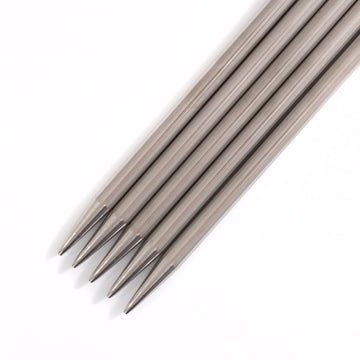 Deramores Double Point Needles - 20cm (8in) (Set of 5)
From $3.99
 KnitPro Zing Double Pointed Needles 15cm (6")
From $6.09
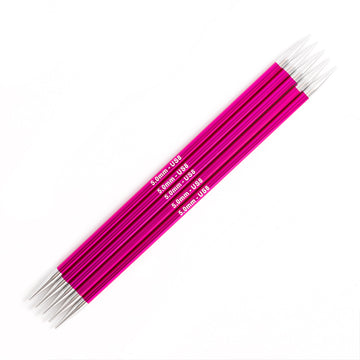 KnitPro Zing Double Pointed Needles 20cm (8")
From $6.09
 KnitPro Karbonz Double Point Needles 6" (Set of 5)
From $11.79
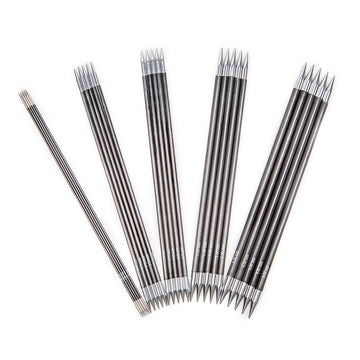 KnitPro Karbonz Double Point Needles 8" (Set of 5)
From $11.79
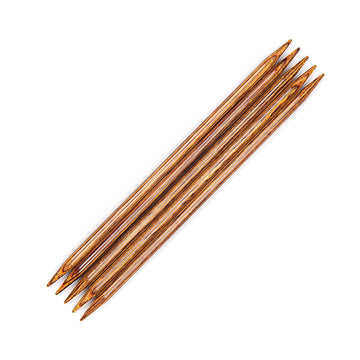 KnitPro Ginger Double Point Needles 15cm (6in) (Set of 5)
From $9.99
 Lykke Driftwood 6in Double Point Needles 15cm (Set of 5)
From $6.39
 KnitPro Smartstix Pink Double Point Needles 14cm (5.5in) (Set of 5)
$9.39
 KnitPro Nova Double Point Needles 8" (Set of 5)
From $10.29
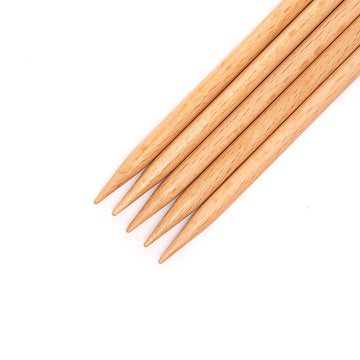 KnitPro Basix Beech Double Pointed Needle 20cm (8in)
From $5.39
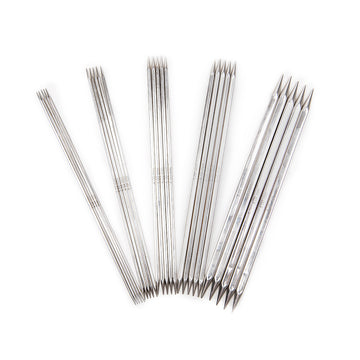 KnitPro Nova Cubics Double Point Needles 8" (Set of 5)
From $8.95
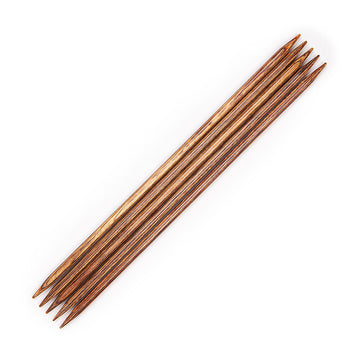 KnitPro Ginger Double Point Needles 20cm (8in) (Set of 5)
From $12.49
 KnitPro Dreamz Double Pointed Needles 20cm (8in)
From $12.49
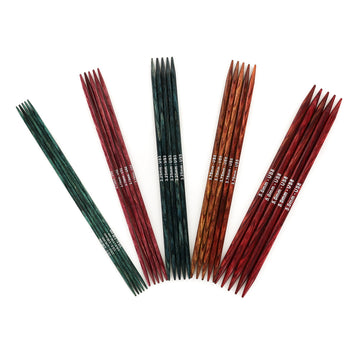 KnitPro Dreamz Double Pointed Needles 15cm (6in)
From $10.29


