What you will find in this pattern library
Two related crafts share this shelf. Counted cross stitch works from a gridded chart onto even-weave fabric, every stitch landing in a predictable square; surface embroidery works from a printed outline and lets you choose which stitches fill it. Both are represented here as instant PDF downloads, alongside a smaller number of printed leaflets and stitch books such as the 20 to Stitch titles and Rico's kawaii motif books. Designers range from independent stitchers selling a single chart to long-established names: Mirabilia's fairy and goddess charts, Anchor's magazine collections and free DMC designs all sit side by side.
Choosing a chart to match your patience
Chart size is the honest measure of difficulty, not the word "beginner". A design worked in ten shades with no blending and no backstitch will be finished in evenings; a large fantasy portrait using specialty threads, beads and half stitches is a winter-long commitment. Read the shade list before you buy. If it runs past forty numbers, budget for the thread as well as the chart.
- First project: a small motif under 60 stitches wide, whole cross stitch only, on 14 count Aida.
- Second: a sampler or alphabet, which teaches you to count rows and place lettering accurately.
- Stepping up: charts with backstitch outlining and French knots, where neatness on the back starts to matter.
- Ambitious: blended needles, fractional stitches, beads and metallics — the Mirabilia charts live here.
- Surface embroidery route: a hoop-sized botanical using six or seven stitches, then a full stitch sampler.
Fabric, count and finished size
Fabric count decides everything about scale. The same chart worked on 14 count Aida comes out roughly a third larger than on 18 count, and on 28 count linen stitched over two threads it matches the 14 count size again. Multiply the stitch count by the count of your fabric to get inches, then add at least 8cm of spare fabric all round for framing or hooping. Aida is stiff, gridded and forgiving, which is why almost every beginner chart assumes it. Linen and evenweave give a softer, finer result and are worth trying once your tension is even.
Threads and tools
Stranded cotton is sold in skeins of six loose strands; charts nearly always tell you how many to separate out, commonly two strands for cross stitch on 14 count and one for backstitch. Separate strands one at a time and lay them back together and the stitches sit flatter. You will also want a blunt tapestry needle in size 24 or 26, small sharp scissors, a hoop or frame to keep tension steady, and good light. Metallics such as DMC Diamant and Light Effects behave badly in long lengths, so cut them short, around 30cm.
Finishing and gifting
Wash the finished piece in cool water with a little mild soap to lift hoop marks and hand oils, roll in a towel, then press face down on a folded towel so the stitches are not flattened. Lace over acid-free board for framing, or trim, back with felt and keep it in the hoop for a quicker finish. Stitched initials, birth records and Christmas ornaments are the classic gifts because they date the moment; allow far more time than you expect if a deadline is involved.
Cross stitch and embroidery questions
Can I print these patterns at home? Yes. Downloads are PDFs, so print on A4 and enlarge the chart if the symbols are hard to read.
What is the difference between a chart and a printed pattern? A cross stitch chart is a symbol grid you count from; an embroidery pattern is usually a line drawing you transfer onto fabric.
How do I transfer an embroidery design? Trace with a water-soluble pen against a window, use dressmaker's carbon, or stitch through printed soluble stabiliser and rinse it away.
Which fabric count should a beginner buy? 14 count Aida. The holes are obvious and mistakes are easy to unpick.
Are there free patterns here? Yes, several designers and brands list free downloadable charts alongside paid ones. Browse the wider embroidery patterns and cross stitch patterns ranges too.


 Full Beginner Embroidery Guide - Learn 14 Beginner Embroidery Stitches - Beginner Embroidery Pattern
$7.18
Full Beginner Embroidery Guide - Learn 14 Beginner Embroidery Stitches - Beginner Embroidery Pattern
$7.18
 Abstract Christmas Tree
$4.95
Abstract Christmas Tree
$4.95
 Colourful Christmas Bauble 5
$4.95
Colourful Christmas Bauble 5
$4.95
 Little Penguin Cross Stitch PDF Pattern
$1.37
Little Penguin Cross Stitch PDF Pattern
$1.37
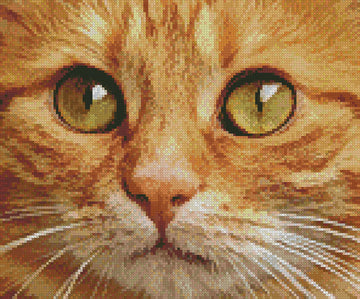 Ginger Cat Close Up
$4.95
Ginger Cat Close Up
$4.95
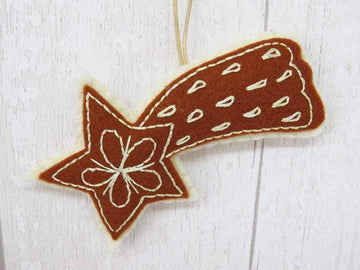 Stitchdoodles Christmas Gingerbread Decorations Felt Cookie Pattern
$5.75
Stitchdoodles Christmas Gingerbread Decorations Felt Cookie Pattern
$5.75
 Guitar Landscape Sunset
$4.95
Guitar Landscape Sunset
$4.95
 Folk Art Christmas Tree
$4.95
Folk Art Christmas Tree
$4.95
 4 Little Snowmen Cross Stitch PDF Pattern
$6.93
4 Little Snowmen Cross Stitch PDF Pattern
$6.93
 Flamingo in DMC - PAT0778 - Downloadable PDF
$0.00
Flamingo in DMC - PAT0778 - Downloadable PDF
$0.00


