Festive charts, from a single motif to a full sampler
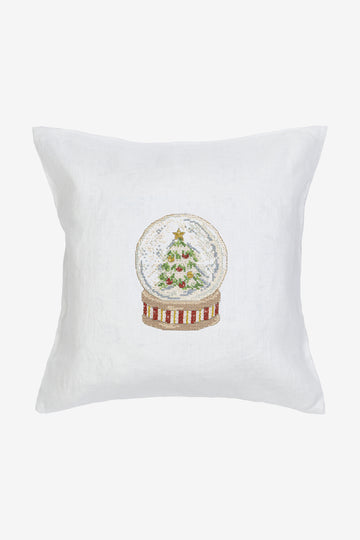
Christmas stitching divides neatly into three jobs: things that hang on the tree, things that hang on the wall, and things that go in the post. Ornaments are small counted motifs finished over card or felt; wall pieces are larger samplers with a date or a family name; cards are tiny charts, often under 40 stitches square, mounted in an aperture card. Deciding which of the three you are making before you choose a chart saves a great deal of unpicking, because it sets the fabric count, the finished size and how much time you actually have between now and Christmas Eve.
Working out finished size before you cut
Counted designs give a stitch count rather than a measurement, and the fabric count decides the rest. Divide the stitch count by the holes per inch: a 70 x 70 design worked on 14 count aida finishes at five inches square, on 16 count at just under four and a half, and on 28 count evenweave stitched over two threads it lands back at five. Add at least three inches of spare fabric on every side for framing or hoop mounting. If a chart looks daunting, moving up to a lower count is the simplest way to shrink the hours without changing a single stitch.
Choosing a project by the time you have
- An evening: a small single-motif card design or a beaded tree ornament in one or two colours.
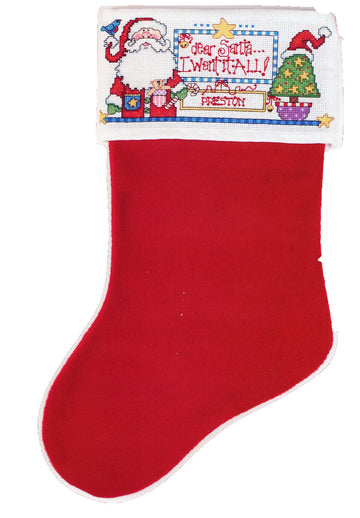
- A weekend: a stocking name tag, a gift-tag set, or a robin or snowflake hoop piece.
- A few weeks: a dated Christmas sampler with an alphabet band and mixed motifs.
- A whole winter: a detailed counted scene with heavy blending, fractional stitches and long backstitch outlines.
Threads, sparkle and the festive palette
Most charts are written for six-stranded cotton, worked with two strands over one aida block for full coverage and one strand for backstitch outlines. Christmas designs also invite metallics, and metallic thread behaves quite differently: work with a shorter length, around 30cm, use a larger needle to open the hole, and let the needle dangle every so often to undo the twist. Blending filament carried alongside one strand of cotton gives frost and candlelight without the tangling of solid metallic. Beads are attached last with a half cross stitch and a beading needle, and they catch tree lights beautifully.
Embroidery designs alongside the counted charts
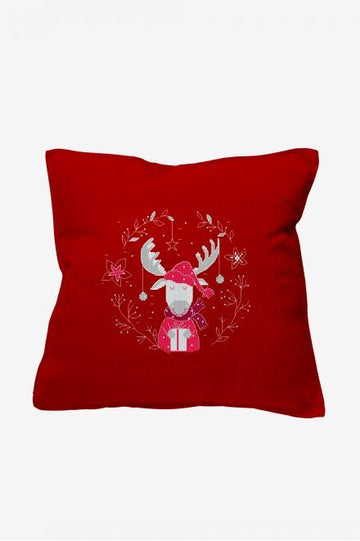
Surface embroidery patterns sit here too, and they are a different pleasure: you are following a printed or traced line rather than counting squares, so stitching is faster and more forgiving. A wreath worked in satin stitch and detached chain leaves, holly in padded satin stitch, or a whole festive scene in stem stitch and French knots will take an afternoon rather than a season. These make excellent gifts finished as hoops, and hoop finishing needs nothing more than a running stitch gathered at the back.
Finishing and storing your Christmas pieces
Wash the finished piece in cool water with a little mild soap only if it has been handled a lot, roll in a towel and press face down on a folded towel so the stitches are not flattened. Tree ornaments are stiffened with card or thin wadding and edged with blanket stitch or a twisted cord in a matching thread. Anything that goes back in the loft for eleven months should be stored flat, out of direct light, with acid-free tissue between layers rather than folded on the same crease each year. For boxed alternatives see the Christmas cross stitch kits.
Christmas stitching questions
Are there free Christmas cross stitch patterns here? Yes, free charts sit alongside the paid designs and can be downloaded as PDFs to print or read on a tablet.
What fabric should I use for tree ornaments? 14 count aida is the usual choice because it is stiff enough to hold a shape once mounted over card.
How late can I start a Christmas project? A card or ornament is realistic within a week. A full sampler needs a couple of months of regular evenings.
Can a beginner tackle these? Certainly. Start with a chart using fewer than six colours and no fractional stitches or blended threads.