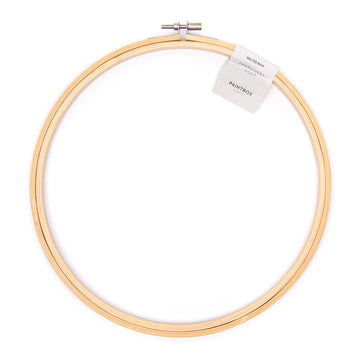
Choose an embroidery hoop for the working area
This range ranges from four-inch Elbesee wooden hoops to 12-inch models, with five-, six-, seven-, eight- and ten-inch options between them. It also includes Groves non-slip sets, Hemline woodgrain flexi hoops, 40mm miniature display hoops and a Lowery extra-wide L bar. Match the product to either stitching, display or stand support.
Use a hoop larger than the immediate motif
The working area should fit comfortably inside the ring without trapping important stitches under the edge. A smaller hoop is light and easy to hold; a larger hoop reduces repositioning but adds reach and weight. Compare design size, fabric margin and hand comfort rather than choosing the largest available diameter.
Convert inch and metric dimensions accurately
For a project centred on Elbesee 6 inch (15.24 cm) Wooden Embroidery Hoop, look at construction, materials, finished size and what is included for Embroidery Hoops and Frames, then choose the exact colour, size or format needed. While looking at Elbesee 8 inch (20.32 cm) Wooden Embroidery Hoop, consider the intended project, material specification and finishing needs for Embroidery Hoops and Frames, including how it works with your materials and available time.
- Measure the stitched area and fabric margin.
- Check hoop diameter and profile.
- Inspect edges for roughness or damage.
- Test tension on spare fabric first.
Fit a wooden hoop evenly
Place the inner ring beneath the fabric, align the outer ring and tighten gradually while smoothing around the circumference. Keep grainlines square and apply only enough tension to support stitching. Excessive force can mark fabric, distort a weave or strain the screw.
Compare non-slip and standard rings
A non-slip hoop is designed to resist fabric movement and can help with materials that relax during work. Standard wooden hoops are simple and light. Neither is universally better: fabric thickness, stitch method and how often the hoop is repositioned determine which grip is useful.
Use flexi hoops for the intended purpose
Hemline woodgrain round flexi hoops have a flexible outer ring and decorative appearance. Check whether the selected size is intended for working, final display or both. Fit the fabric without overstretching and follow the product method for closing and hanging.
Reserve miniature hoops for tiny designs
The Groves 40 × 40mm pack contains three mini hoops suited to very small motifs or display pieces. Their limited opening demands accurate centring and minimal seam allowance. They are not substitutes for a full-size working hoop when hands need room to stitch.
Reposition without crushing stitches
Loosen the ring fully, lift it rather than dragging and avoid clamping over beads, knots or raised work. Place a clean protective layer over completed stitches if the technique permits. Recheck fabric alignment and tension after every move.
Remove or loosen hoops during storage
Long-term compression can create marks or flatten stitches. Follow the fabric and kit guidance; many projects benefit from having the working hoop loosened or removed between extended sessions. Store the clean fabric flat or rolled without sharp folds.
Understand the Lowery L bar
The extra-wide L bar is a stand accessory, not a complete stand or embroidery frame. Confirm compatibility with the specific Lowery workstand, clamp and project width. Support heavy frames securely and follow assembly instructions rather than improvising connections.
Finish a hoop for display
Centre the design, establish even tension and trim or secure excess fabric on the reverse using an appropriate method. Add backing if desired to protect stitches. A working hoop can become a display frame only when its finish, depth and condition suit the textile.
Keep hoop surfaces clean
Handle rings with dry hands, wipe them according to their material and keep wood away from excess moisture. Inspect screws and flexible rings before use. Transfer staining, splinters or corrosion can permanently damage pale needlework.
What hoop size should I choose?
Select a diameter that contains the current area with enough room to stitch comfortably. Large designs can be worked by repositioning a smaller hoop carefully.
Can every hoop display finished embroidery?
No. Consider condition, profile, appearance and how the reverse will be finished. Some products are primarily working tools.
Is the Lowery L bar a complete stand?
No. It is an accessory that must be checked for compatibility with the relevant workstand and clamps.