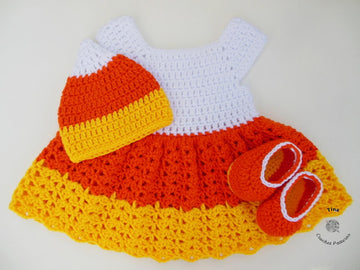
Everything you need to crochet for a new arrival
This collection gathers the whole baby wardrobe in one place: cardigans and jumpers, matinee-style jackets, bonnets and beanies, booties and bootee-and-mitt sets, rompers, dungarees, all-in-ones, christening gowns and pram blankets. Designs sit side by side from several designers and yarn brands, so you can compare a plain garter-edged raglan against something with a textured yoke or a scattering of picot edging. Many patterns are graded from newborn or 0-3 months right through to two or three years, which means one purchase can be crocheted again and again as a baby grows, or made in three sizes as a gift set for a family with siblings.
Where to start if you have never crocheted a garment
A baby cardigan is genuinely one of the kindest first garments there is. The pieces are small, so a mistake costs you an evening rather than a fortnight, and the shaping is usually limited to a few decreases at the armhole. Look for a top-down raglan worked in one piece: you begin at the neck, increase at four marked points, split for the sleeves and keep going down the body, so there is almost no sewing up at the end. Once that feels comfortable, move on to a jumper with a buttoned shoulder opening (babies have surprisingly large heads relative to their necks), then to yoked designs with bobbles, shells or simple two-colour stripes.
Yarn weight, hook size and how much you will need
- DK on a 4mm hook is the workhorse for baby crochet: warm enough for a cardigan, quick enough to finish, and neat in stitch definition.
- 4 ply on a 3mm or 3.5mm hook gives the fine, heirloom look traditional matinee coats and christening pieces are written for.
- Aran on a 5mm hook suits pram blankets, jackets and anything for winter, and works up very fast.
- A 0-3 month DK cardigan typically takes one or two 100g balls, roughly 200-350m. A hat and booties set usually comes out of a single ball with plenty left over.
- Choose machine-washable merino, cotton or a soft acrylic blend. New parents rarely have the time or inclination to hand wash.
Tools and notions worth having in the tin
Beyond hooks, keep a set of locking stitch markers for raglan points and buttonhole placement, a blunt-tipped tapestry needle for weaving ends, a soft tape measure and small sharp scissors. Buttons matter more than you would think on baby knits: choose smooth, flat, machine-washable ones and sew them on with a doubled length of strong thread, checking they cannot be pulled free. If you are making a romper or all-in-one, a few poppers or a length of babygrow-style snap tape at the crotch makes nappy changes far easier than fiddly buttons.
Techniques you will meet along the way
Most patterns here rely on chain, double crochet, half treble and treble, plus increases and decreases. Beyond that you will meet the shell and V-stitch fabrics that give matinee jackets their softness, back-loop-only ribbing for cuffs and welts, and simple surface crochet or embroidery for faces and details. Colour changes at the start of a row, the standing stitch join, and the invisible fasten-off are all small skills that lift the finish noticeably. Pattern PDFs include their own stitch abbreviations list and most designers note whether they use UK or US terms, which is the single most common source of confusion, so check that line before you begin.
Gifting, seasons and finishing
If you are crocheting for a baby due in spring, size up: a newborn cardigan finished in March will be too small by the time the evenings turn cool. Cotton and cotton blends work well for summer babies and for hot nurseries, wool blends for winter. Block the pieces gently by pinning them out damp to dry flat; it evens the stitches and stops fronts curling. Wash at 30 degrees in a mesh bag and dry flat, so shoulders keep their shape.
Common questions
Is there a free crochet baby cardigan pattern for 0-3 months? Yes. Filter the collection for free patterns, then check the size range in the description; the PDF downloads straight to your pattern library and stays there for good.
How much yarn does a baby jumper take? Usually one to two 100g DK balls for the smallest sizes, more for toddler sizes. Always trust the yardage stated in the pattern over a rule of thumb, and buy an extra ball in the same dye lot.
What else can I make to complete the set? Try our baby blanket crochet patterns for a pram cover, add a bonnet from the baby hat range, or crochet a small friend from the toy patterns.